

Machine learning forms the foundation of artificial intelligence. It enables computers to learn from data, recognize patterns, and make decisions without being explicitly programmed. While it doesn’t enjoy the same level of buzz as “AI,” machine learning (ML) is the engine driving most real-world AI applications. From predicting Netflix shows to helping cars drive themselves, ML touches nearly every industry and part of life.

These terms are often used interchangeably, but they aren’t the same. Artificial intelligence (AI) is the broader concept of machines being able to carry out tasks in a way that we would consider “smart.” ML is a subset of AI that focuses on the idea that systems can learn from data and make decisions on their own.
In short:
It’s not about which one is better. Think of machine learning as the technology powering most of today’s AI. Many applications that we label as “AI” run on systems that learn from data and improve over time. So, if you’re looking at careers, investments, or education, focusing on ML is often more practical and directly applicable.
There are several ways that systems can learn:
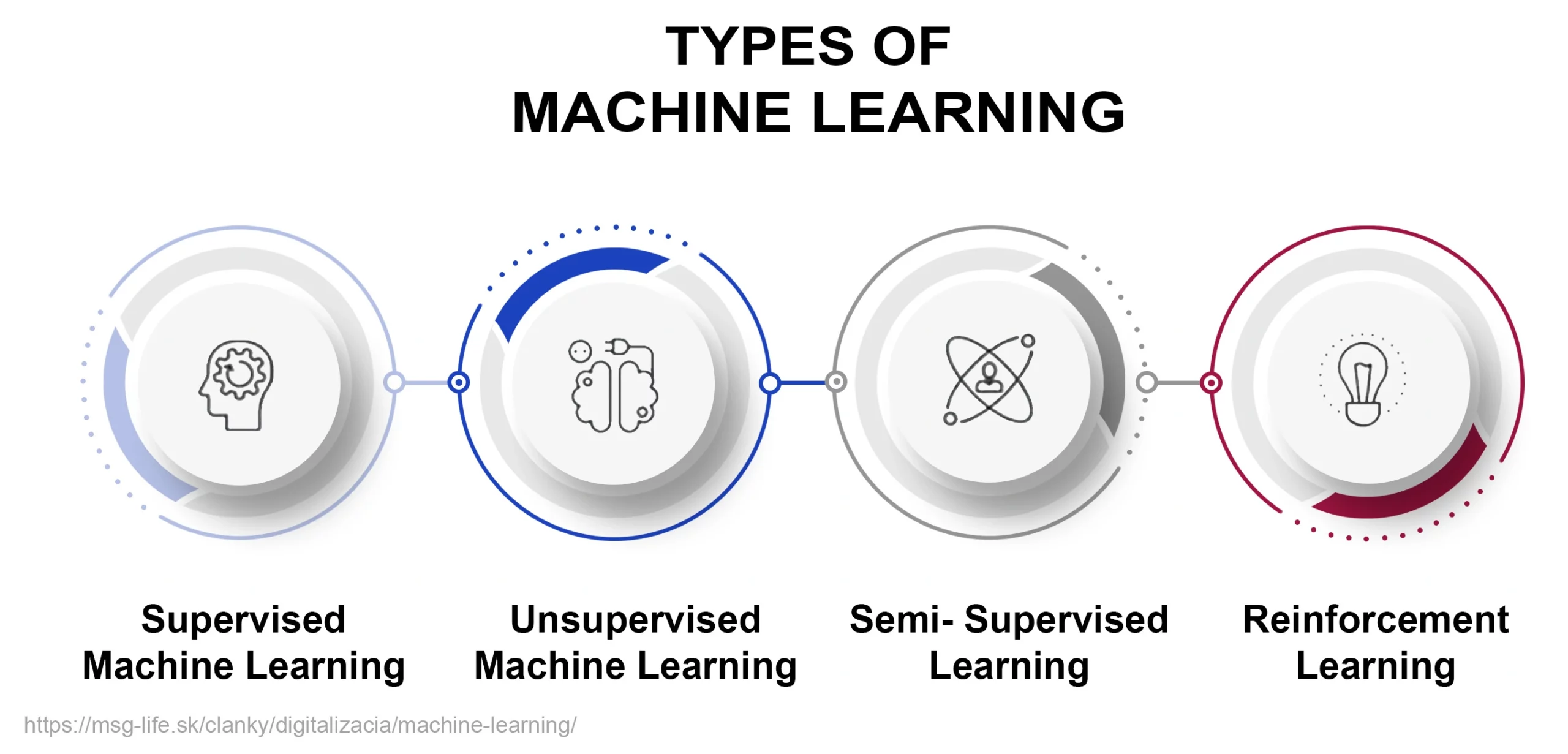
Supervised learning algorithms are trained using labeled data — that is, data that already includes the correct answer. It’s like learning with a teacher. These algorithms are used in spam detection, fraud detection, and recommendation systems.
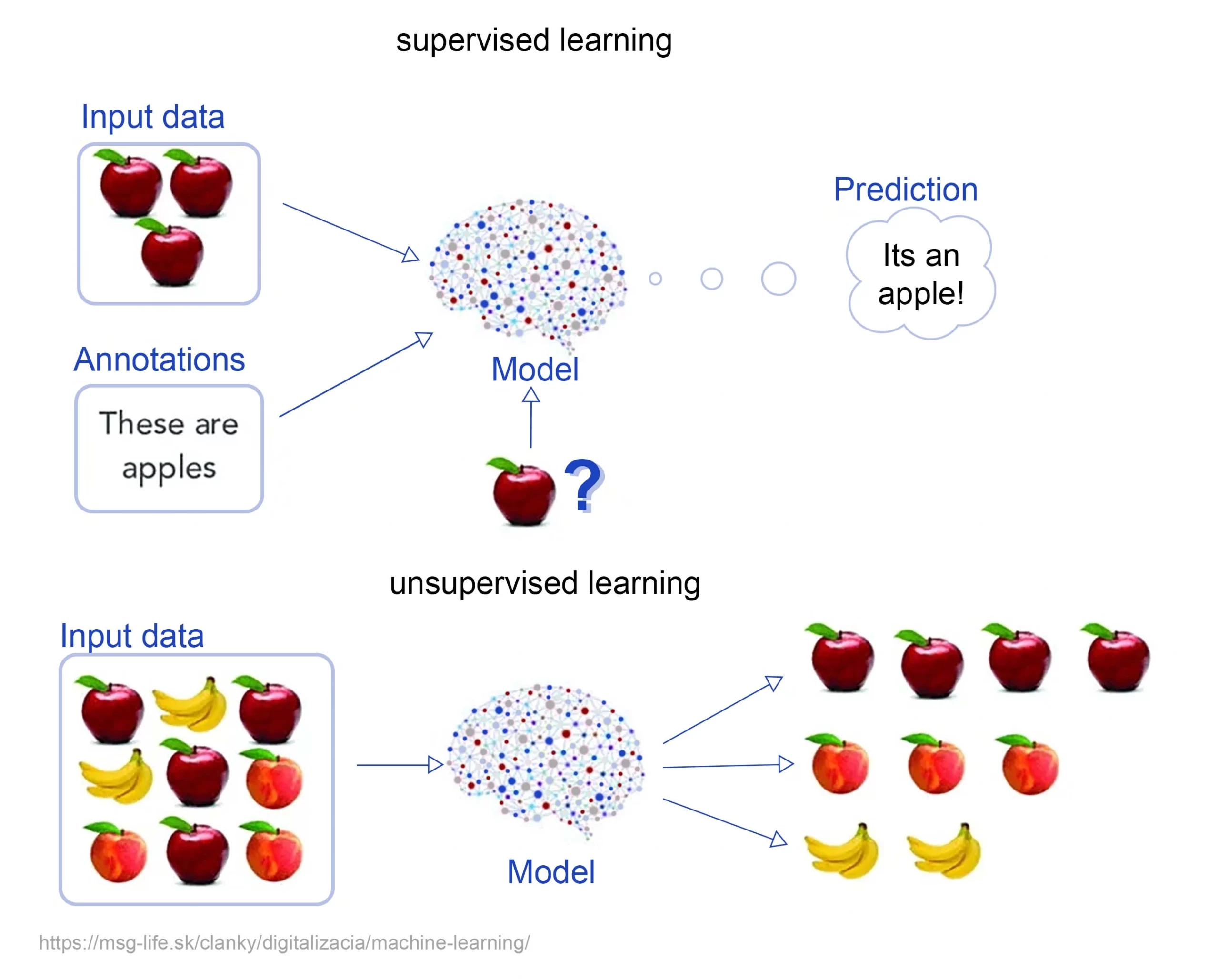
Unsupervised learning doesn’t use labeled data. It identifies underlying patterns or clusters within the data.
It’s used for market segmentation, anomaly detection, and topic modeling.
This is a mix — the algorithm learns from a small set of labeled data and a larger set of unlabeled data. It’s cheaper and faster than fully supervised learning and can still provide strong results.
This method involves teaching a model through reward and punishment. It’s often used in robotics, gaming, and real-time decision-making (e.g., self-driving cars).
This is a common point of confusion. Here’s the breakdown:
If you’re looking for a clear introduction, many recommend starting with Google’s free resources or a technical book on practical methods. When you start learning in Python, there’s one library you’ll keep seeing: Scikit-learn. It’s practically the go-to library for getting your hands dirty with machine learning models. Whether you’re classifying emails as spam, predicting house prices, or grouping customers by behavior, Scikit likely has the tools you need — all in a simple, beginner-friendly package.
Scikit-learn is an open-source Python library that builds on top of other scientific libraries like NumPy, SciPy, and matplotlib. It provides easy-to-use implementations of the most common machine learning algorithms, including:
In short, it’s a complete toolkit for building classical machine learning models — without the heavy math or overly complex code.
Other popular tools you’ll see, including those from Google, are:
Most online machine learning courses (like Andrew Ng’s or DataCamp) start with this library because it’s the perfect tool for learning concepts without drowning in complexity. As you get comfortable with these techniques, you’ll naturally transition to using advanced models. PyTorch or TensorFlow when you dive into deep learning.
So, if you’re just starting out, open up a Jupyter notebook, install Scikit-learn, and try training your first model. It’s the first step into a much bigger — and incredibly exciting — world.
So far, we’ve explored how systems learn as a powerful tool — but deep learning is where things get seriously exciting.
Deep learning is a subfield of ML that mimics how the human brain works — using something called artificial neural networks. These networks are made up of layers of nodes (like neurons) that process data in increasingly complex ways.
Why “deep”? Because these models have many layers — sometimes dozens or even hundreds — which allows them to learn abstract patterns in data. Deeper neural networks are capable of extracting more intricate and abstract insights from data.
At its core, a deep learning model is fed raw data — such as pixels from an image or words in a sentence — and it automatically figures out which features matter. Instead of relying on manual feature engineering (which traditional ML often needs), deep learning models learn features directly from data.
That’s a game changer. Especially in cases like:
So, while ML is versatile and lightweight, deep learning is powerful and perfect for complex data — as long as you have the resources.
An algorithm in this field is more than just a set of rules — it’s a strategy for uncovering patterns, relationships, and predictions from data. These algorithms are the brain of any ML system, transforming raw data into real-world insights.
Let’s explore a few popular types — each with its own strengths:
Each of these algorithms has its own personality. Some are quick and easy to interpret (like decision trees), while others are more powerful but complex (like neural networks). Choosing the right one depends on your data, your goals, and how much interpretability you need.
Modern ML workflows often involve experimenting with multiple algorithms and using tools like Scikit-learn or XGBoost to benchmark their performance. It’s a mix of science and art — and getting your hands dirty with different models is the best way to learn what works where.
Set aside the outdated image of a solitary programmer hunched over a keyboard. A ML engineer is one of the most exciting — and high-impact — roles in tech today. Think of them as architects of intelligence. They don’t just write code; they build systems that learn, adapt, and make decisions. That’s the stuff behind Netflix recommendations, fraud detection, and even self-driving cars.
Unlike data scientists who focus on exploration and insight, machine learning engineers bring ideas to life. They turn algorithms into scalable, production-ready systems. That means working with real-time data pipelines, model optimization, and deployment across cloud platforms.
And yes — they collaborate. A lot. With data scientists, software developers, product managers, and business stakeholders to turn messy real-world data into smart, useful products.
When it comes to machine learning salary, the figures can vary widely based on experience, location, and company. A ML engineer’s pay typically reflects the high demand and specialized skills required in this field. Let’s dive into the details of what you can expect in terms of earnings as a ML engineer.
Here’s what the numbers say:
But salaries don’t just reflect hype. They reflect impact — and scarcity.
Three words: complex, valuable, rare.
ML engineers are like unicorns who can both understand the math and ship working systems. That’s why companies fight for them.
Want to become one? The roadmap is clear: master Python, get deep into ML courses, and start building. Projects beat theory every time — and there’s a world of problems waiting for smart solutions.
Want to break into the exciting world of ML but don’t know where to begin? You’re not alone — and you’re in luck. There’s a wealth of high-quality online courses that can take you from zero to job-ready, no PhD required.
These platforms are trusted by students, professionals, and industry experts alike:
TIP: Start with a course that matches your experience level. If you’re new to programming, focus on Python basics first before diving deep into ML.
These courses don’t just teach theory — they train you to think like a ML engineer. Expect to cover:
This technology powers much of the tech we use every day. It’s not just theory — it’s everywhere:
Whether you’re building smarter apps or transforming industries, ML has the tools.
Before jumping into your first machine learning course, make sure you’ve got these foundational skills:
Not sure where you stand? No problem — many beginner ML courses include refreshers or links to learn these first.
The main methods include supervised learning, unsupervised learning, semi-supervised learning, and reinforcement learning. Each method uses data in different ways to recognize patterns and make predictions.
Machine learning is used in many areas, including spam detection, fraud prevention, healthcare diagnostics, personalized recommendations (like Netflix and Google), and self-driving cars.
With many beginner-friendly resources, courses, and tools like Python and Google’s tutorials, learning machine learning has become accessible even without a technical background. Start with the basics before moving to advanced models.
Yes. Many platforms, including Microsoft’s Azure Machine Learning, provide user-friendly interfaces where you can use machine learning without deep coding. You can experiment with pre-built models, drag-and-drop workflows, and automated machine learning (AutoML) to start using these technologies practically in your projects.
Yes, Microsoft Learn offers free, beginner-friendly courses on machine learning, including practical labs on using Python, Azure, and building your first models. These courses are designed to help you use machine learning in real-world projects, whether for your career or your business.
Deep learning is redefining the limits of what AI can achieve. From GPT-like language models to image generation (like DALL·E), these systems can now create, summarize, answer, and generate at a human level — or even beyond.
But it’s not about replacing traditional machine learning. Instead, it’s about knowing which tool to use for the job. For some use cases, a decision tree might still outperform a neural network — especially when data is limited or explainability is key.
I have been programming in Java for more than 10 years, currently I work at msg life Slovakia as a Java programmer senior and I help customers implement their requirements into the Life Factory insurance software. In my free time I like to relax in the forest or play a good computer game.
See who translates insurance into code at msg life Slovakia.