

In the article you will learn:

Structured CV – a phrase that everyone who has looked for a job at least once in their life has come across. It is required by many employers, and a template for it is provided by several programs that will make it easier for you to create. But how does a structured CV differ from other types and what to look out for when writing one? We’ve got all the key information to help you get to the interview.
A structured CV is a simple document that contains all the information found in any type of CV. This means that you should include:
So what makes a structured CV different from others? The most striking feature is that it is clear and concise. You write the information concisely and in words – usually describing it in just a few words or shorter sentences.
Most of the information is presented in bullet points, with each section of the CV separated by a distinctive subheading or horizontal line. This makes the document easy to read and the recruiter can find all the necessary information in a fraction of a second.
Creating a structured CV is much easier when you have a clear picture about it. The following characteristics will help you do this:
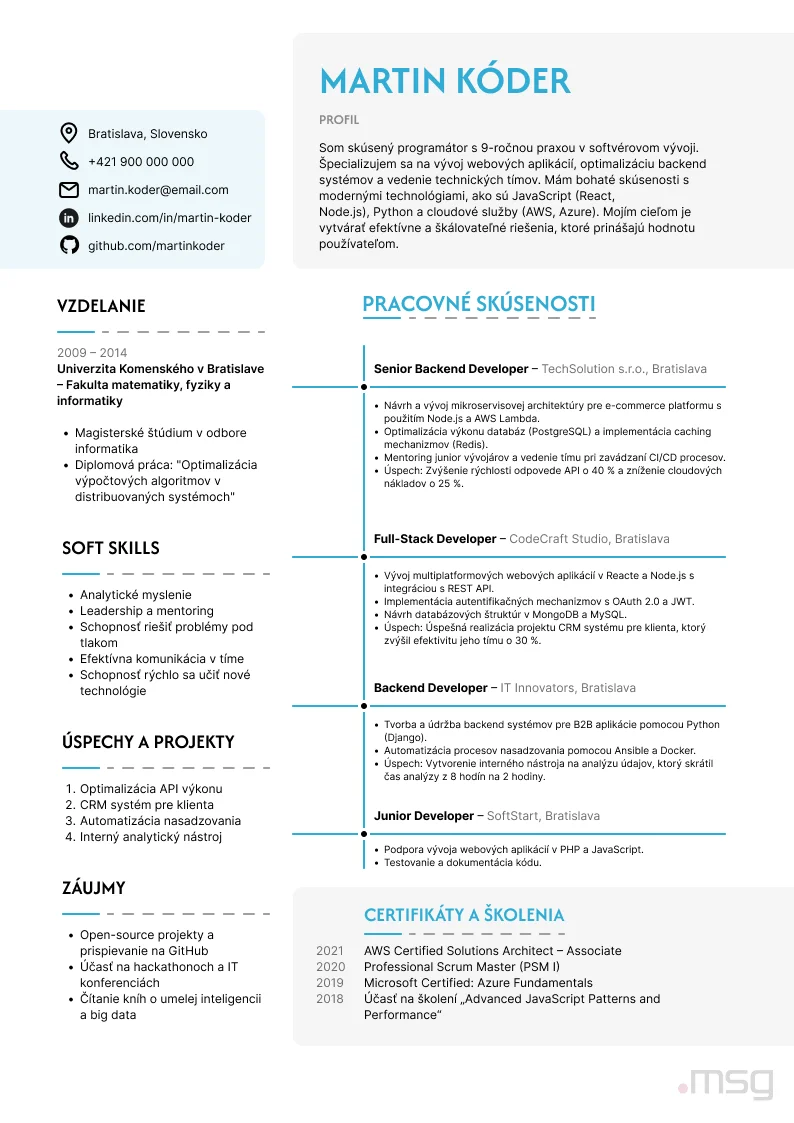
When you decide on this type of CV, you should know what are its biggest advantages and disadvantages.
Benefits include:
On the other hand, a structured CV also has its disadvantages, which are:
According to the type of structure, we divide the structured CV into three basic categories:
We’ll talk more about each.
The chronological structured curriculum vitae is one of the most widely used. It is characterised by its focus on your work experience, which it prioritises above all others. That’s why this information is more comprehensive and is at the top, usually just below personal details such as phone number or address.
Under work experience, education is listed, followed by skills and abilities, and then additional information you would like to use in a future job. However, all of this information is only given very briefly.
The advantage of a chronological structure is that it is established and highlights your work achievements. On the other hand, the disadvantage is that it is used by almost everyone and is therefore the least original of all.
A sample chronological biography looks something like this:
A professional CV, sometimes referred to as a functional CV, focuses mainly on your skills, such as knowledge of a foreign language or operating programs. It also focuses on your strengths, which may include meeting deadlines, ability to work under stress, flexibility, and so on.
You should choose two to four skills to describe in bullet points on your CV. You can mention how you used them in your last job, where you acquired them or how you would like to use them if you get the job.
A professional CV has several advantages. Among them is that it is more original than a chronological one. By highlighting your strengths right at the beginning, you slightly distract from the weaker job section. The downside, however, is that some recruiters may not be satisfied with brief information about your career.
This type of CV is particularly ideal for:
And what are the elements of a structured CV? The template generally looks like this:
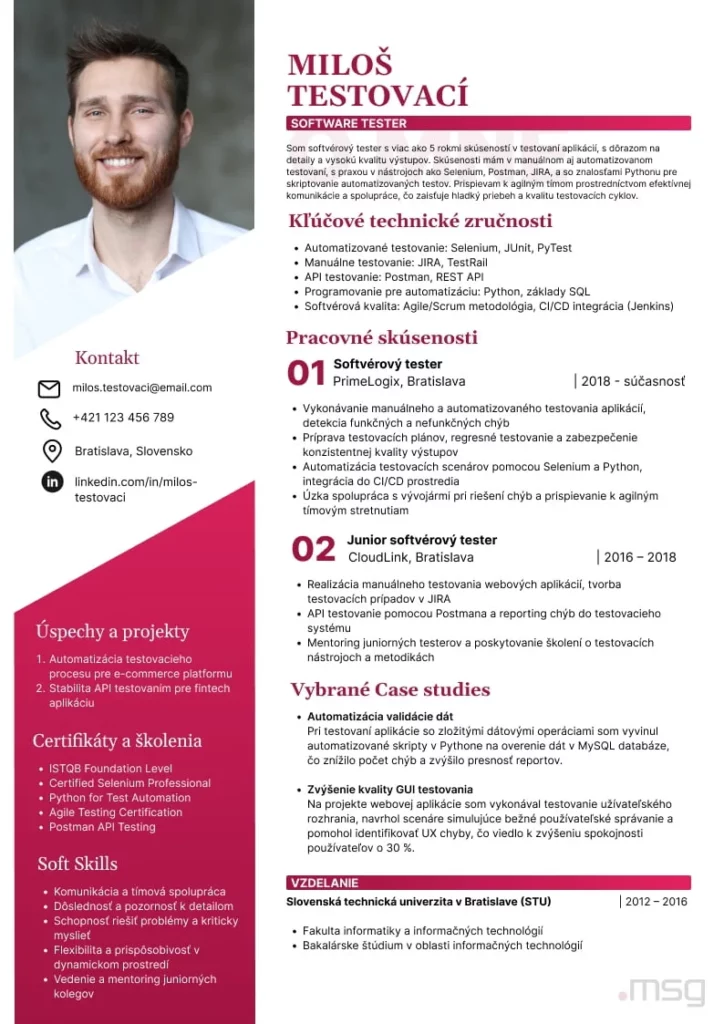
The combined CV represents a happy medium between the chronological and the professional structured CV. It is characterised by giving equal space to work experience and skills. It’s a great choice for those who have a career path without major gaps, while possessing multiple practical and relevant skills.
The strength of the combined structure is that it provides comprehensive information from both areas, not just one. However, the disadvantage can be more complicated to prepare, as this type of CV is the most comprehensive of the three.
To maintain a balance between the two parts, it is good to stick to this structure:
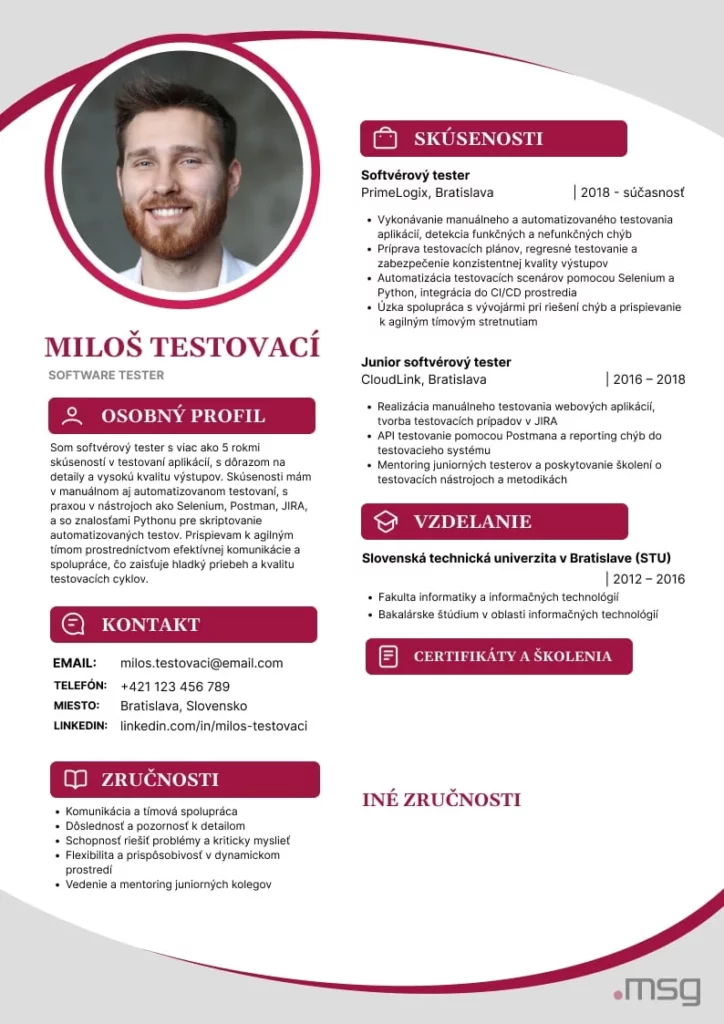
At the same time, try to make the skills and work experience sections similar in length.
The choice of structure is up to you and your needs. Most people choose a chronological structure focused on work experience, as this is the form most often expected by recruiters in Slovakia.
However, if you’re a recent high school or college graduate, or if you haven’t worked in the field before, bet on the career structure. If you want to elevate both your personal skills and your professional achievements, choose a combined structure.
Formatting is key because it affects the look of your CV and the first impression you make. So stick to these rules:
Today, the structured CV is used in almost all fields, including administration, government, banking, management and services. It is particularly advantageous for recruiters who can go through it very quickly and find out what your strengths are and whether you are a suitable candidate.
The one exception where a resume with a clear minimalist structure might not be the ideal choice is in creative fields. In those, potential employers may expect a document that is more elaborate in design.
A structured CV is clear, logical and simple. It gives recruiters all the key information about you and helps you land your dream job. Use the tips we’ve given you to quickly and easily create a professional CV that’s eye-catching and free from unnecessary mistakes.
At msg life Slovakia I take care of the company culture, events and I am part of the marketing team. I like a job where I can be creative and contribute to making my colleagues at msg feel good. I regularly prepare for you
not only news and interesting things from the world of information technology and insurance, but also from behind the scenes events at msg life Slovakia.
See who translates insurance into code at msg life Slovakia.