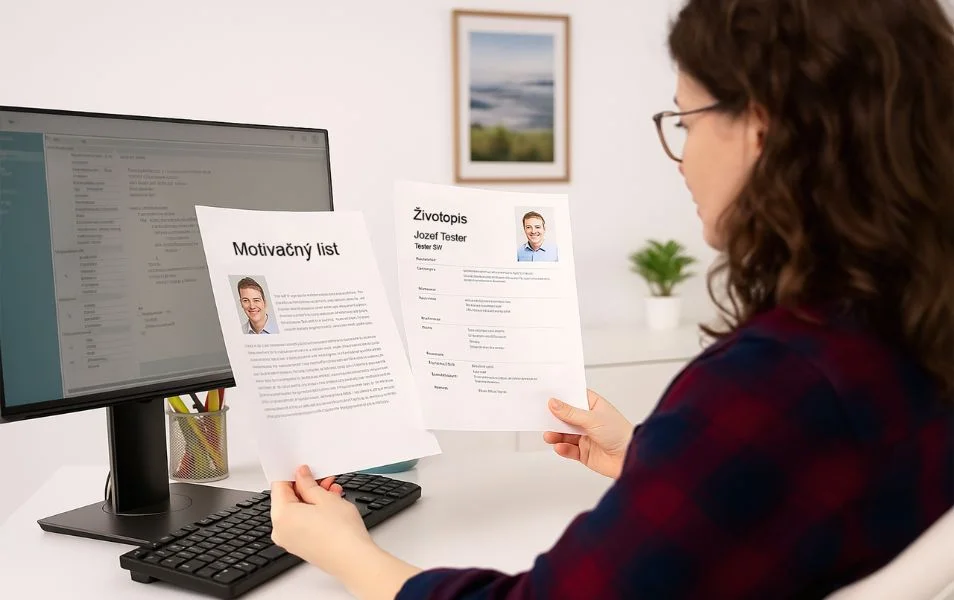

The interview questions you will receive from a potential employer are various. However, they are always combined so that the other party can see what experience you have, what your character is like and whether you are a suitable candidate. If you’re going to a job interview and want to know what questions you might encounter, we’ve put together the most common ones with answers.

Job interview is a common part of the recruitment process. During the interview, the potential employer meets with the candidates for the job and finds out whether they are suitable candidates.
What many people forget is that a job interview is a dialogue. You should therefore actively talk to your future employer and ask questions yourself. Don’t be afraid to ask him things about the company, work processes or other areas that interest you.
At the job interview, your future employer will ask you a few questions. Your answers should be prompt, clear and understandable. Ideally, they should be shorter but concise. When answering, try to avoid constantly jumping off topic or making irrelevant comments.
The questions included in the interviews are usually very similar. Employers will be interested in your experience, education and future plans. If you want to prepare for them in the best possible way, we’ve listed the most important questions for you below. Plus, we didn’t skip answering the interview questions.
The skills and abilities on your CV (Read also our article Resume skills tips) may reveal something about you, but HR professionals want to know more. That’s why the interview includes questions that relate directly to you, your achievements, education and work experience.
This category usually includes questions such as:
This question or challenge will not bypass you in a job interview. Therefore, briefly describe the key milestones in your life. Tell them where you studied and where you gained the necessary experience. Avoid overly personal topics and areas that are not relevant to the job interview.
Try to appear confident but not arrogant when answering. Back up everything you say with facts and arguments. Don’t make anything up unnecessarily, because HR staff will eventually uncover the bigger and also smaller lies.
For many employers, admitting a mistake, error or weakness is also sympathetic. So don’t be afraid to mention them in a monologue full of superlatives and achievements.
Tell your real reasons for leaving or having left your previous job. Rather than saying outright that you had a bad boss or a low salary, mention that you’ve been considering a change for a longer time because of a better future outlook or because of goals that have been unfulfilled for a longer period of time.
If you did not terminate your employment by your own choice, briefly describe what preceded it. But certainly don’t lie.
Feel free to use the feedback you received in your previous job to answer this question. But be careful not to highlight qualities such as friendliness, hard work or responsibility without any context. To an employer, it might seem like you’re making things up or don’t know how to answer the question correctly.
Therefore, always add to the characteristics the situation in which they were manifested. For example, when you say that colleagues rated you as reliable, detail how they were able to rely on you for a project.
You will also encounter the following questions in interviews:
Recruiters also like to ask questions about the company you’re applying for. Through them, they find out what you know about it and whether it was just one of the many companies you sent your CV to.
This category includes questions such as:
No one expects you to know the entire history of the company and its every milestone. On the other hand, you should definitely know what kind of business they are in and what services or products they provide. You can also mention its greatest achievements or the clients its works with.
If you’re looking for tricky interview questions, this is one of them. The recruiter uses it to check that you understand what is expected of you in the job and that you are ready to start work immediately.
So start with the qualities that are key to the position. For example, if you’re a Java developer, tell them you know several programming languages that the company uses most often. This can help you in many areas without additional training.
Then add a few more specific points you would address in the first weeks after starting your job. This will show the recruiter that you really know what the position requires and that you are ready for it.
The following questions also come up in interviews:
When you know what questions employers ask in an interview, it’s time to move on to the next area. We’ll talk about what you should be asking employers.
As we have already mentioned, the job interview = dialogue. So your job is not only to answer, but also to ask questions. Don’t rely on the fact that you will come up with your questions during the interview. You may not know what to say when it’s your turn. And you definitely don’t want that.
Go through both the employer’s website and the job offer you responded to before the interview. Write down everything you can think of accordingly. In addition, you can also be inspired by our questions:
How to answer interview questions that are sensitive? It is best not to answer, because the recruiter should not ask such questions. As a rule, this includes questions and topics related to privacy, sexual orientation, religion or marital status, such as:
If you encounter similar questions, answer as follows:
The question of how to prepare for a job interview troubles almost all candidates for a new job. If you have a meeting with a prospective employer or recruiters, follow this advice:
The interview is your chance to impress a potential employer and show that you have what it takes to land your dream job. To really succeed, you need to prepare for the job interview properly. Find out what questions recruiters ask most often and how you should answer them. Then, don’t forget the right clothes to make an impression, punctuality and all the necessary documents.
At msg life Slovakia I take care of the company culture, events and I am part of the marketing team. I like a job where I can be creative and contribute to making my colleagues at msg feel good. I regularly prepare for you
not only news and interesting things from the world of information technology and insurance, but also from behind the scenes events at msg life Slovakia.
See who translates insurance into code at msg life Slovakia.