

The classic CV template shows you what the document looks like and what it should contain. It will also show you how it differs from a modern one, so you can find out which alternative is more suitable for you. We’ve put together basic information on each type of CV, along with samples and practical advice that will help you when you’re looking for a new job.

The classic CV is the most common type of document you will come across. It is characterised by clarity, formality and simplicity. It only briefly lists information about you and your experience, rarely going into detail. Therefore, it is often accompanied by a cover or motivation letter in which you can elaborate on your qualities and experience.
Other features of the classic CV include its minimalist design. It is usually a white document with black font. You can use italics or bold to highlight certain sections or information. Alternatively, you can enlarge some words, but you shouldn’t use fancy fonts or different colours.
In order to make the classic CV easy to read and to prevent the information from blending together, it is divided into several basic parts:
Sample of a classic CV
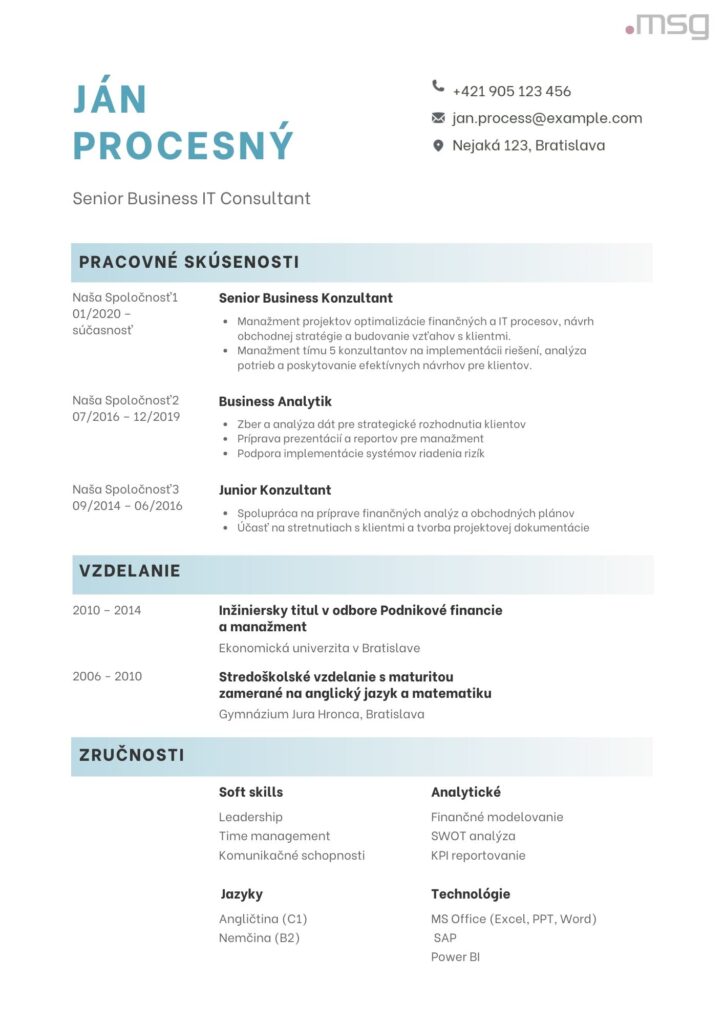
The classic CV has several advantages and disadvantages that you should know about before you decide to use it.
The classic type of CV should be chosen especially when:
A modern CV is a creative type of document that often uses a variety of graphic elements that can easily set you apart from other applicants. Another advantage of a modern CV is that, unlike a traditional CV, it contains detailed information about you, your experience, skills and hobbies, so there’s often no need to attach a cover letter or other supporting documents.
This type of CV is most often used in dynamic and creative fields where you need to stand out on first contact. It’s more difficult to prepare, but if you put the effort in, it can help you land your dream position.
A modern CV should have the same sections as a classic CV, namely:
Don’t be be afraid to go in-depth when filling in your details. Write longer sentences and paragraphs, introduce projects you’ve worked on, courses you’ve taken, etc. Avoid being brief and short bullet points of information.
Sample of a modern CV
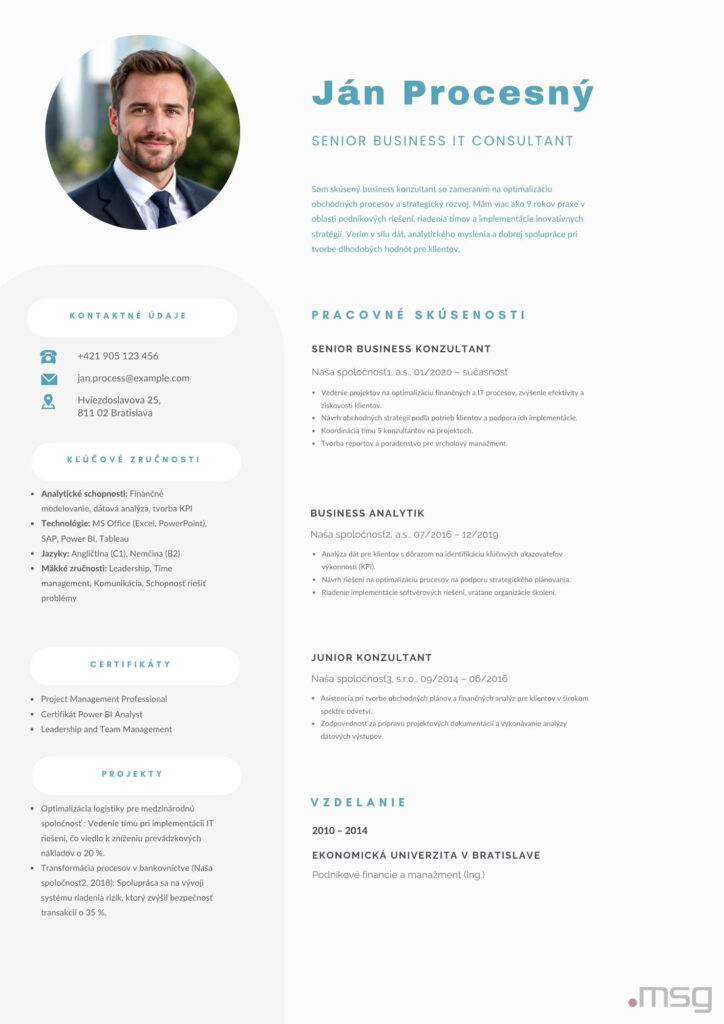
Even a modern CV has its advantages and disadvantages:
A modern CV is suitable when:
Once you have an idea of what a classic and modern CV looks like, you can move on to choosing one and then creating it. If you still don’t know which is best for you, answer the following questions:
Follow these tips when creating your CV:
Writing and sending out CVs is time-consuming. If you don’t want to start from scratch, try pre-made templates on the internet. The classic CV template is simple and can be completed in a few minutes. A modern CV template , on the other hand, gives you some idea of what it might look like, but doesn’t limit you in any way. It’s up to you how you customize it. Use our practical tips to impress your potential employer on first contact.
At msg life Slovakia I take care of the company culture, events and I am part of the marketing team. I like a job where I can be creative and contribute to making my colleagues at msg feel good. I regularly prepare for you
not only news and interesting things from the world of information technology and insurance, but also from behind the scenes events at msg life Slovakia.
See who translates insurance into code at msg life Slovakia.