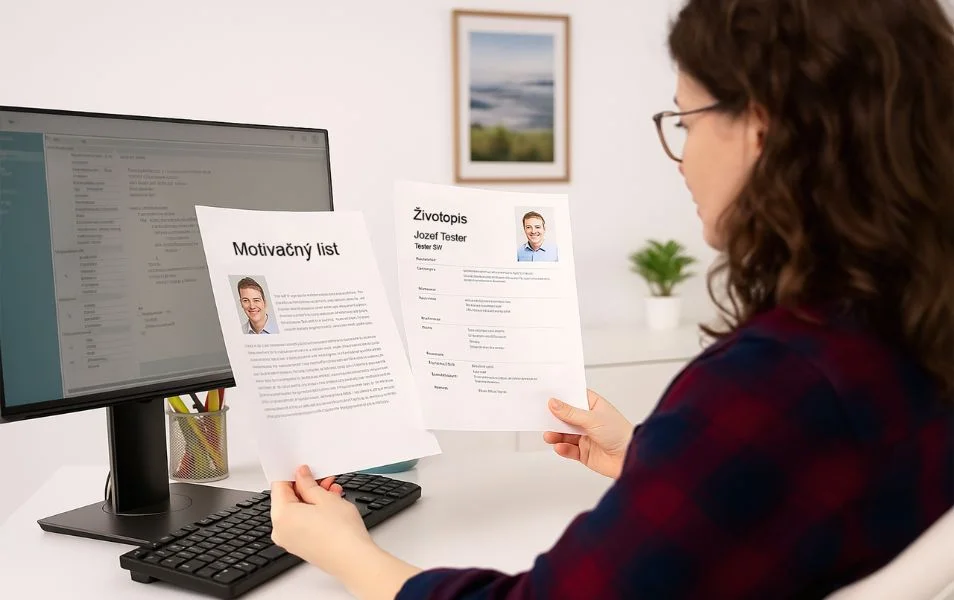

A student resume is a practical tool for anyone applying to university or looking for a job alongside their studies. Writing such a resume is not difficult, but it differs from the classic resume in many ways. Find out what it should contain and how to write it to avoid unnecessary mistakes.

You may ask why a resume is important for a high school or a college student? There are several reasons for this:
The first is an interest in studying at university. Most schools require a resume with your application to find out more about you and your experience. Colleges are not only interested in your grades in individual subjects, but also your extracurricular activities and work experience. If you’ve worked in a field related to your dream college, your chances of getting in increase.

The second reason why an undergraduate needs a resume is a job alongside your studies. Many high school and college students are looking for summer jobs, first part-time jobs or internships, and to get them they need to provide an employer with a clear document that includes all important information – work experience, education, skills, etc.
Why choose a structured resume? This format is ideal because, as an undergraduate, you probably don’t have extensive work experience to describe in detail. Plus, temporary jobs or internships usually don’t require a complex resume with a highly customized layout, like those seen in modern designs.
Are you wondering how to write a resume for a temporary job or college that is formal and contains all the important information? We have prepared for you some practical tips and tools to help you.
Today, you can create your resume in a variety of handy tools that make the whole process fast and the result looks original, modern and professional. These tools include Canva, which offers countless interesting templates — some minimalist, others more elaborate. Choose a style that fits the field you want to work in.
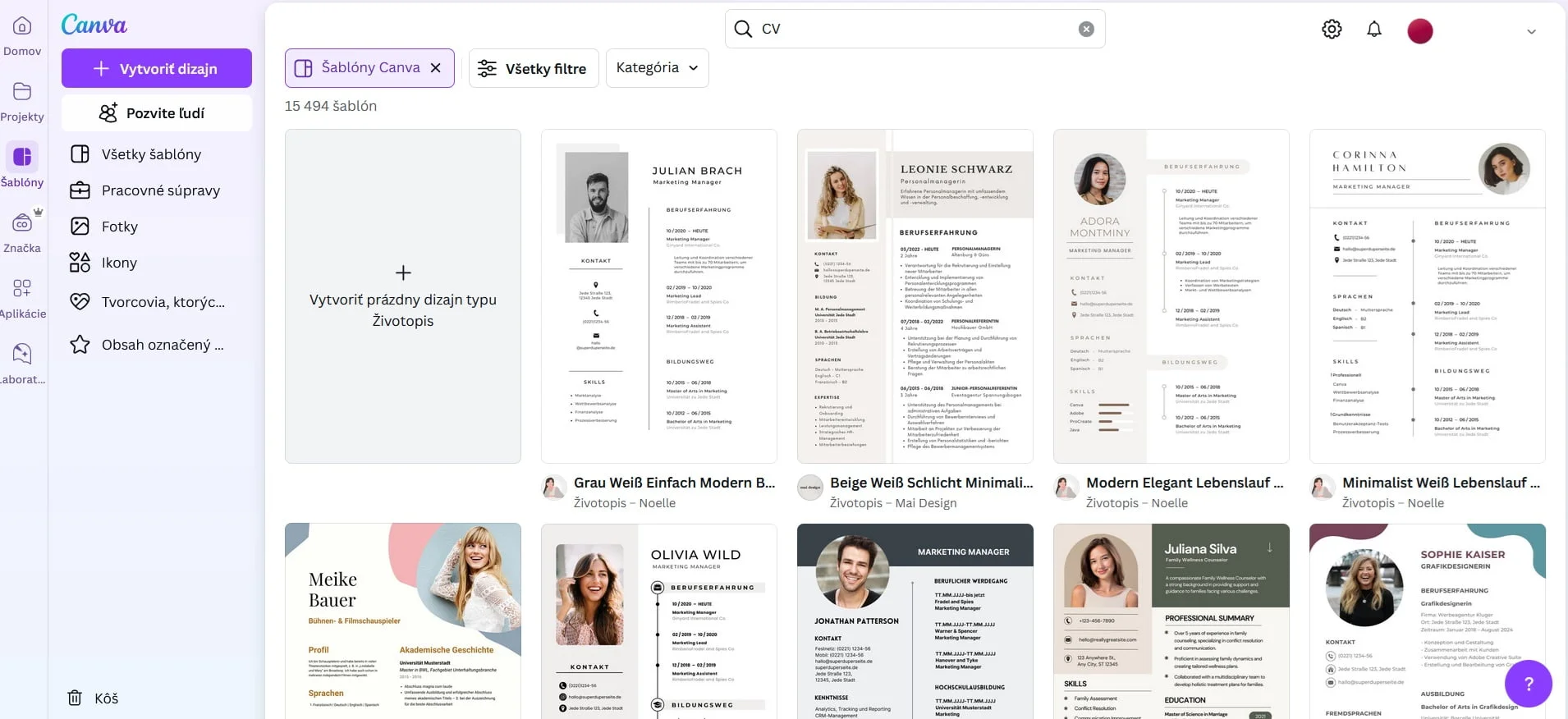
In the case of administration, public administration or the economic field, it is ideal to choose rather simple and austere design. On the other hand, if you’re into writing, web design or photography, don’t be afraid to experiment with bolder and more creative templates.
The Profesia.sk portal provides a simple resume template, where you fill in the necessary information in the relevant sections, save the document in PDF format and send it to the potential employer.
You can also find many other portals on the Internet that offer quick resume creation, such as Kickresume.com or Kariera.sk.

You can also write your resume in Word, but this option is the hardest. You will have to create the whole document from scratch yourself. If you want your resume to look its best, you’ll need to get the formatting right – spacing, font size and color, as well as sectioning.
You can also use various graphic editors or Google templates available on the Internet. These templates can be downloaded, filled in, saved and submitted. There are more than enough options nowadays, so you don’t have to worry about making your resume lengthy or difficult.
Resume creation tools are important, but the correct structure of the document is equally important. In general, there are three basic structures.

This format is most commonly used by candidates applying for full-time positions. It focuses primarily on work experience and career success, which are presented in detail. Sections like education or interests are typically secondary.
A chronological resume begins with personal information, followed by work experience, education, skills, and optional sections.
This structure is the opposite of the chronological format — it emphasizes skills and strengths, while work experience takes a back seat. It’s ideal for high school and college students who don’t yet have extensive professional experience.
A functional (or skills-based) resume starts with personal information, followed by key skills with detailed examples — for instance, from internships or competitions — then education (don’t forget to include academic achievements, thesis titles, or project summaries), work experience, and optional sections.
As the name suggests, this format combines elements of both previous types. It gives equal weight to skills and work experience, making it a good option for students who already have some professional background.
A combination resume starts with personal information, followed by skills, work experience, education, and optional sections. This format is more demanding to structure well, as it requires balancing all the key sections evenly.
A resume for high schools students differs from one written by college students. This is mainly because high school students have less experience and are usually mainly interested in summer jobs rather than internships or jobs they could continue after graduation.
If you study, you should create strong bullet points in which you include the following information:
In order to make your resume interesting, it is important to highlight different types of skills and strengths. Mention some of your soft skills such as:
Don’t forget to include hard skills which may include:
The information you put on your resume varies according to what type of writing you do. For example:

Most college students already have some work experience, so their resume doesn’t feel too empty. Still, it’s a good idea to choose a skills-based structure that focuses on strengths. A well-structured resume includes:
The resume you send should reflect the type of opportunity you’re applying for:
If you want your resume to be the best it can be, follow these recommendations:
To catch an employer’s eye, your resume should highlight hard skills — the technical abilities you can apply to get the job done. These are not innate but learned through training and education. You can build hard skills through:
Common IT hard skills include, for example, proficiency in programming languages, knowledge of algorithms and data structures, computational and mathematical skills, and many others. Remember that you should only include hard skills in the job description section on your resume.

Soft skills are abilities that are often acquired naturally, but can be developed over a lifetime – they can be both innate and learned. They are qualities and traits that characterise you. While they may not seem as essential as technical skills, many jobs require strong soft skills.
As a student, you have many opportunities to grow them:
Teamwork, presenting projects, receiving feedback, and engaging in class discussions all help. Sometimes, you’ll need to build soft skills through habit — for example, to improve time management, create a weekly schedule and stick to it.
Classic soft skills include, for example, team leadership, teamwork, ability to work under pressure, creativity, critical thinking, and more.


Yes, many colleges ask for a job application resume to see your extracurricular activities, relevant coursework and research experience, achievements, volunteer work, and part-time jobs. It is a way to highlight your strengths beyond grades and make your application more compelling.
In the section at the top, include your contact information and possibly your headshot. Continue with other resume sections, like education section, relevant work experience or internships (also abroad), volunteering, free time activities, relevant skills section (languages, computer skills), and interests related to your field of study or job.
Keep it to one page. Focus on clear, relevant information, knowledge and qualifications rather than adding unnecessary details.
Yes, using a clean, modern student resume sample can help structure your relevant experience clearly. Just ensure it’s ATS-friendly if applying to jobs online.
Yes, it’s a great way to demonstrate soft skills — for example, team sports show teamwork, and blogging highlights writing skills — or to connect your activities to your field of study.
A student CV is usually shorter and more concise than a traditional CV, but still has a number of rules, that you should keep in mind. If you follow them when writing it, your document will perfectly introduce you to a potential employer. We hope our tips help you succeed in applying for a job, internship, or part-time opportunity. Who knows — maybe it’ll be with us at msg-life!
Interested in working in IT? Check out our current job openings.
At msg life Slovakia I take care of the company culture, events and I am part of the marketing team. I like a job where I can be creative and contribute to making my colleagues at msg feel good. I regularly prepare for you
not only news and interesting things from the world of information technology and insurance, but also from behind the scenes events at msg life Slovakia.
See who translates insurance into code at msg life Slovakia.